


“Music,” Irene Hemelaar says. “I stem from music.”
This is no mere decorative detail of her life story, but an introduction to the melody of her life. Before she addressed the United Nations, became an activist, researcher, trade union adviser, Pride Amsterdam organizer and chair of Stichting OndersteBoven, Hemelaar learned how people gather, remembering the sound of family before the sound of activism and politics.
She grew up in Amsterdam, the youngest child and only girl in a working-class Catholic family with four older brothers. Her father was a central heating mechanic. Her mother was a nurse. At birthdays, people sang. Someone brought a ukulele. Someone else brought a harmonica. Lyrics were typed into booklets so everyone could join. It was here Irene first learned the power of one voice joined by many. It was here she first learned how to hold a room, and later command a stage.
Her public biography now reads like several lives layered over one another: born and raised in Amsterdam, entrepreneur, singer, writer, speaker, researcher, organizer, former Director of LGBTI Emancipation for Amsterdam Pride, and strategic adviser and trainer at the FNV trade union. But Hemelaar does not describe her work as a climb through institutions. She talks about moments “when something happens in front of you, and you realize you are either going to accept it or act.”
“I started around the age of 35,” she says acknowledging her late start to LGBTQIA+ activism. “Before that, I just picked the fruits of everybody else’s work. I never thought about anything. I just enjoyed it. And then, all of a sudden, funding was cut.”
The severe cuts in funding changed her worldview. She began to see the labour behind the freedoms she had inherited: the networks, the women who had organized before her, the people who had made public life possible for others who arrived later and called it normal.

Around that time, Hemelaar was connected to the Schorer Foundation, which had been active in HIV/AIDS care and LGBTQ health. In her telling, the organization had started to recognize that lesbian and bisexual women had their own health needs. Then came the old institutional dodge: the money, she recalls being told, had to go to male projects, “because lesbians don’t have any problems because we don’t hear them nor see them.” A crease of frustration appears, across her features as she recalls these difficult moments.
That sentence did not make her quieter. It helped lead to Stichting OndersteBoven. The foundation’s origin story begins in January 2005, when women working professionally on holebi issues had had enough: public bodies and funders were willing to finance work around gay men, while budgets for women seemed not to exist. Funders asked first for proof: how many LesBische women were there, and did they really have specific problems? In October 2006, Stichting OndersteBoven was founded as a new initiative for research, visibility and action around lesbian and bisexual women.
Hemelaar and other women began meeting at Cafe Saarein, Amsterdam’s historic women’s bar. They talked. They compared experiences. They decided the absence of research could not be allowed to masquerade as proof that nothing was wrong. With the University of Amsterdam, OndersteBoven carried out what the foundation describes as the first large-scale study into the lifestyles and well-being of LesBische women in the Netherlands. The research examined the impact of stigmatization on the mental and physical health of lesbian and bisexual women; according to OndersteBoven’s history, the findings even led to parliamentary questions in 2009.
Hemelaar puts it more plainly. “Of course we knew what the outcome would be,” she says, “that the health of lesbians and bisexual women wasn’t as good as that of straight women, and that’s why something needed to be done.”
That is one of the recurring patterns in her career: knowing the lesbian and bisexual experience from life first, then having to convert that knowledge into a form institutions would recognize. Research. Data. Published work.
In the Netherlands of the 90s, even the language was still catching up. “Everything was gay,” Hemelaar says, gesturing to the oversimplification of messaging and limited resources. “Gay before, gay after. Lesbians didn’t exist, trans people didn’t exist at all, let alone non-binary people, intersex people, asexual people. We didn’t know about that at all. Me neither, because we didn’t hear anything, we didn’t know.”
“I always love to be wrong,” she says. That may be the sentence that makes the rest possible.
She says this without pretending she was born with the right vocabulary. Hemelaar’s story is one of learning, sometimes late, and then taking responsibility for what the new knowledge requires. Language, in her work, is not etiquette. It is access. A community that is unnamed is easily unfunded. A health problem that is unnamed is easily dismissed. A Pride programme that says “gay” and assumes everyone else will fit inside can still leave women standing outside the actual design.
That was the early fight inside Pride Amsterdam. Women & Pride now names that history directly. Pride Amsterdam states that far into the 2000s, women were largely invisible and underrepresented because the programme focused mainly on gay men. The Proud Lesbian Boat in 2007 and LesBian Pride in 2009 marked a shift. Today, Women & Pride describes itself as a community-driven programme shaped by and for women in all their diversity, where recognition, protest, support and celebration can sit side by side.
For Hemelaar, that evolution is repair. She is interested in what happens after the word “inclusive” has been said. Who gets a stage? Who gets a safety plan? Who gets funding? Who gets asked early enough that their needs do not appear later as an inconvenience? Who is visible only during a parade, and who is supported when something goes wrong?
One current OndersteBoven project makes that question concrete. In 2026, the foundation says it is working with Centrum Seksueel Geweld and Pride Amsterdam on a social map for WorldPride, playing a central role in the Women & Pride committee, building community and initiatives during Pride Month and WorldPride, and carrying out the Samen Sterk project with partners including QueerHub, Vrouw&Vaart, Lola Lieven and Team Inclusive.
Samen Sterk is aimed at safety for LGBTQIA+ women, girls and non-binary people. OndersteBoven describes the gap clearly: women’s organizations may lack LGBTQIA+ expertise, while queer safety work often focuses on anti-gay violence. Queer women, trans women and non-binary people can fall between systems. The project offers workshops, dialogue and meetups to help people recognize intimidation, know where to go, and build a network where no one is left alone.
In conversation, Hemelaar distills that gap into one hard line: “Queer women can’t go anywhere.” She does not dramatize it. Her response is to organize.
That instinct now meets a global stage. Amsterdam will host WorldPride for the first time from July 25 to August 8, 2026, under the theme UNITY. Pride Amsterdam frames the event as both a celebration and a call for visibility and awareness worldwide, marking 25 years since the first same-sex marriage took place in Amsterdam in 2001. The year also carries layered anniversaries: 30 years of Pride Amsterdam, 80 years of COC Netherlands, 25 years of civil marriage, and 55 years since the abolition of Article 248bis.
WorldPride is not just larger Pride. Amsterdam is not only hosting tourists; it is hosting activists, organizers, cultural workers, elders, young people, people from countries where rights are collapsing, and people from communities where “tolerance” has never been enough. Pride Amsterdam says WorldPride should be a fully inclusive celebration where new connections are made and collaborations are born, so activists return home energized and part of a new wave of LGBTQIA+ emancipation and activism.
Women & Pride gives that ambition a sharper edge. Its mission links LGBTQIA+ rights with women’s rights, trans rights, racial justice and safety, and calls on the wider queer community to support women’s leadership not as symbolism, but as a condition of a strong movement.
This is where Irene’s life experience becomes essential for this moment. She has seen how easily women become an afterthought in movements that speak of freedom. She has seen how limited language masked as inclusion can dismiss experiences of marginalized people. She has seen how research can force institutions to acknowledge what women have already known.
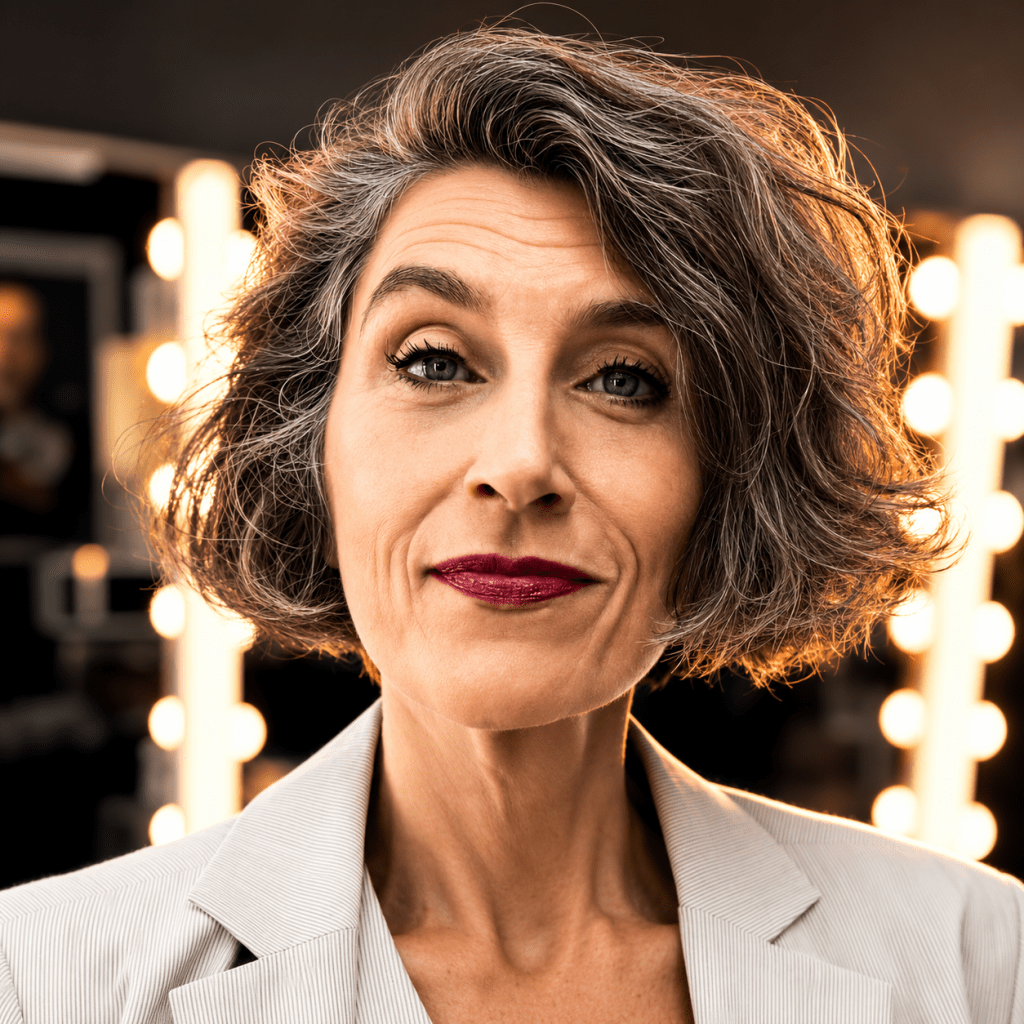
One of the biggest lessons Irene has learned and shares with others: nothing that lasts gets built alone. Hemelaar’s trade union work shaped her understanding of activism. At the FNV, she read workplace conflicts and saw how personal injuries often belonged to larger structures. That perspective stayed with her. “You really need to make sure that you are with a group, that you don’t do it alone,” she says. “It’s like trade union organizing work.”
That may be the cleanest summary of her politics. One person can begin the song. One person can push a meeting into motion. One person can stand at a microphone. But lasting change needs a group, a structure, a place where leadership can be shared and people can recover without the house falling down.

In 2015, Hemelaar stood at one of the world’s most formal microphones as part of the Dutch women’s delegation to the United Nations General Assembly speaking on LGBTQ rights. Her published speech called for the advancement of all women — heterosexual, lesbian, bisexual, transgender and intersex — and argued that no one should be left behind.
What she remembers most is not only the speech, but the responsibility of carrying other people’s words. “In that whole year leading up to this moment, I was in touch with so many fantastic activists — lesbian, bisexual women in the Netherlands, intersex people — who said, if you are there, please speak about this,” she says. “I brought everything that people asked me to say there on that particular stage with me.”
That is how she seems to understand representation: not as arrival, but as transport. You do not stand there alone. You bring the room that was not invited.
Now, through OndersteBoven and Women & Pride, Irene is still building ways for rooms to find each other. One idea she is carrying into WorldPride is a Sister Cities project connecting sapphic organizations across borders. One city may be working on safety, another on health, another on workplace equality, another on visibility. If they know one another, they can share methods, build partnerships and potentially access cross-border support.
“How nice is it,” she says, “that there may be, in another city, in another country, an organization like yours?” It sounds simple because the best infrastructure often does once someone has done the thinking.
Hemelaar has a phrase for the informal power she builds with women and non-binary friends. “We call the work the witchery,” in direct contrast to the old boys club outdated rules forced onto society. A nod to the persecution of intelligent, resourceful and powerful women of the past, who joined together to make changes.
The witchery is women moving knowledge, care, access and courage through the places where official power has been slow, stingy or blind.
Near the end of our conversation, she borrows another phrase, this one from EL*C: “lesbian genius.”
“Let’s get lesbian genius out,” she says.
For Hemelaar, lesbian genius is not a slogan for a tote bag. It is a resource that has been underused because women have been undercounted. It is the organizer who notices who is missing. The elder sapphics who remembers what was tried before and advice to the young women who want to try again in the future to avoid costly mistakes. The young person who expands on language of culture and identity in a way that is lasting. The activist who has learned, after years of doing the work, that being wrong is not a humiliation – but is essential for growth.
Irene Hemelaar’s work is not about being seen once. It is about changing the conditions under which people become visible to one another, to institutions and to themselves. Through Stichting OndersteBoven, Women & Pride and WorldPride Amsterdam, her career has become a long argument against disappearance: name the women, count the women, fund the women, protect the women, connect the women.
Then let them sing loud enough that nobody can say they were never there.